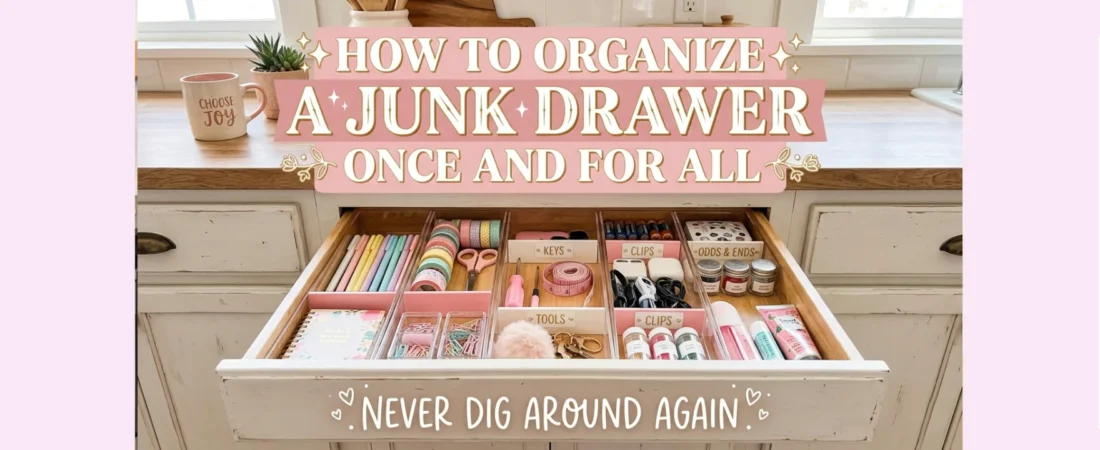
🚀 Quick Answer
Empty everything, sort into categories, get drawer dividers or small containers, assign each item a specific home, and maintain with a “one in, one out” rule. The key is being ruthless about what actually deserves drawer space.
Let me be honest with you – I used to have the junk drawer from hell. You know the one I’m talking about. That drawer where batteries rolled around with rubber bands, where pens had no caps and bottle openers lived next to expired coupons. Every time I opened it, I’d cringe and quickly slam it shut.
But I finally conquered that chaos, and I’m going to share exactly how I did it. This isn’t just about making it look pretty for a week – this is about creating a system that actually works long-term.
🧹 Start with the Great Purge
The first step in learning how to organize junk drawer spaces is the hardest one: you need to empty that drawer completely. I mean everything. Don’t try to organize around what’s already there – trust me, I tried that approach and it never works.
When I finally dumped my entire junk drawer onto my kitchen counter, I was shocked. There were three bottle openers (why?), a collection of dead batteries, and approximately seventeen pens that didn’t work. The sheer volume of unnecessary items was embarrassing.
💡 Pro Tip: Lay out a large towel or sheet before dumping everything out. It makes cleanup so much easier and keeps small items from rolling away.
Go through each item and ask yourself: “When was the last time I actually used this?” If you can’t remember, or if it’s been more than six months, it probably doesn’t deserve prime real estate in your most accessible drawer.
📦 Create Logical Categories
Now comes the fun part – sorting everything into categories that make sense for your household. In my experience, most junk drawers contain these common categories:
- Writing supplies: Working pens, pencils, markers
- Tools: Screwdrivers, measuring tape, small hammer
- Batteries: Only the ones that still have juice
- Kitchen gadgets: Bottle openers, can openers, pizza cutters
- Office supplies: Paper clips, rubber bands, tape
- Emergency items: Flashlight, matches, first aid basics

The key is being realistic about what you actually need quick access to. Just because something is small doesn’t mean it belongs in the junk drawer. That collection of old phone chargers? Those probably belong in a tech storage box elsewhere.
🏗️ Choose Your Containment Strategy
Here’s where most people go wrong – they try to organize without proper dividers. A drawer without boundaries is just chaos waiting to happen again.
I’ve tried various approaches, and honestly, the best solution is usually a combination of small containers and adjustable drawer dividers. You don’t need anything fancy – I use a mix of small glass jars, plastic containers I already had, and some simple plastic dividers.
📖 Remember: Measure your drawer dimensions first! I learned this the hard way when I bought organizers that didn’t fit properly.
For categories that tend to tangle (like rubber bands or hair ties), small lidded containers work wonders. For frequently used items like pens or screwdrivers, open sections work better for easy grabbing.
🎯 Assign Everything a Home
This is the secret sauce that makes the organization stick: every single item needs its own designated spot. Not “somewhere in the front section” – an actual specific location.
I label everything in my junk drawer. Yes, it might seem excessive, but when other family members are looking for something, they know exactly where it goes back. This prevents the slow slide back into chaos that happens when organization systems aren’t clear.
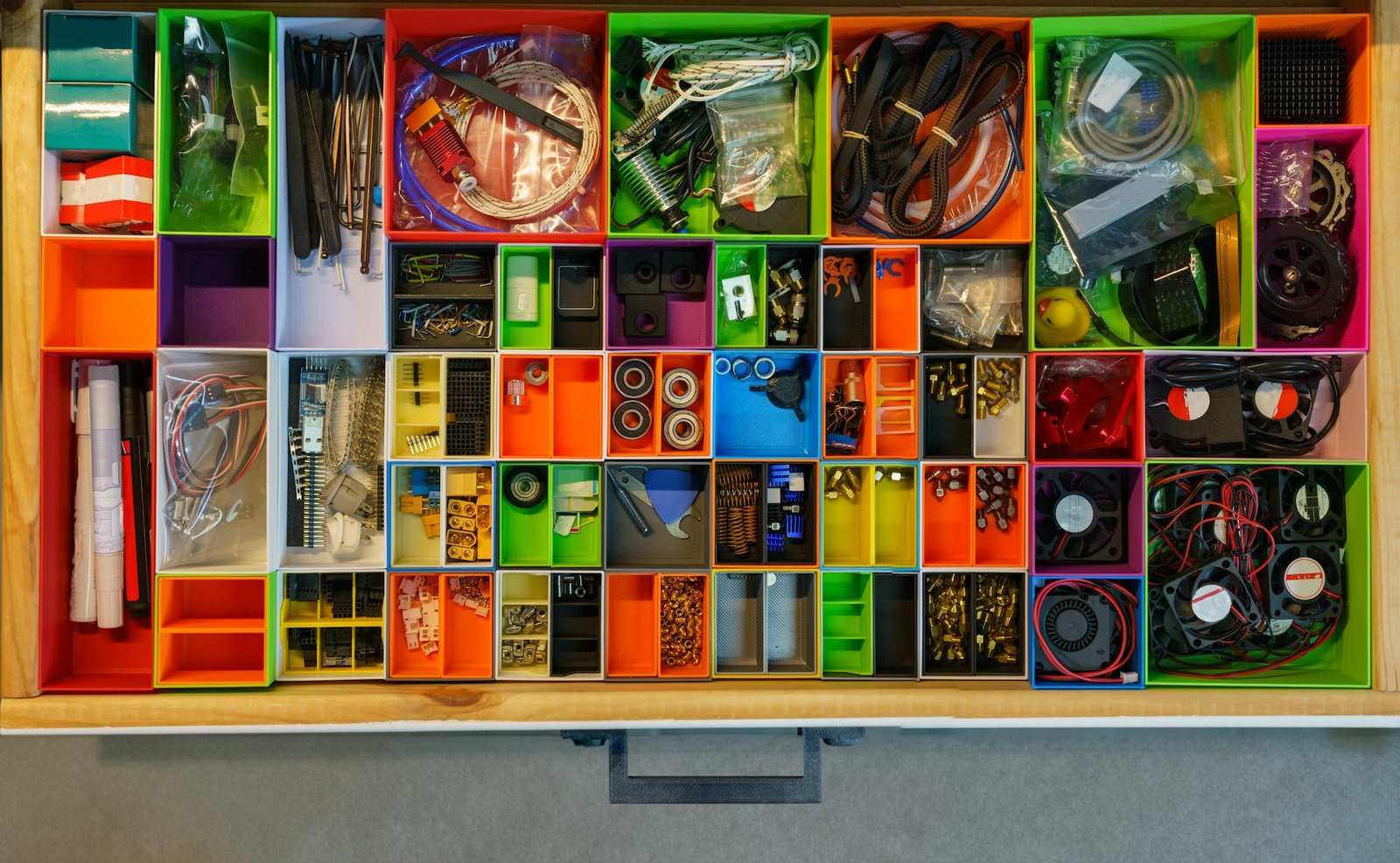
Put your most frequently used items in the front and center. In my drawer, that’s pens, scissors, and tape. Less frequently used items like batteries or matches go toward the back or sides.
🔄 Establish Maintenance Rules
Here’s what I wish someone had told me years ago: organization without maintenance rules is temporary decoration. You need systems to keep things organized.
My golden rule is “one in, one out.” When I buy a new pen, one of the old ones has to go. When I get a new tool, I evaluate whether I really need both the old and new versions.
I also do a quick 5-minute reset once a week. Usually while I’m waiting for coffee to brew, I’ll open the drawer and put everything back in its proper place. This prevents small messes from becoming big disasters.
Similar to how I organize kitchen countertops, the key is dealing with clutter before it builds up. Check out my method for keeping kitchen countertops clear and organized – many of the same principles apply to drawer organization.
🚫 Common Mistakes to Avoid
I’ve made every junk drawer mistake in the book, so let me save you some frustration:
Don’t skip the sorting step. I know it’s tempting to just buy organizers and stuff things in, but without proper sorting, you’re just creating organized chaos.
Don’t make sections too small. If you have to force items to fit in their designated spaces, the system won’t work long-term.
Don’t ignore vertical space. Small stackable containers can double your storage capacity if you have a deep drawer.
Don’t forget about other family members. If they don’t understand the system, it won’t last. Make it intuitive and clearly labeled.
📝 What Actually Belongs in a Junk Drawer?
After years of trial and error, I’ve developed strong opinions about what deserves junk drawer real estate. This space should be reserved for items you use regularly but don’t have a dedicated home elsewhere.
Good junk drawer residents: working pens, scissors, tape, measuring tape, small screwdriver, bottle opener, matches or lighter, rubber bands, paper clips, and fresh batteries.
Items that should live elsewhere: expired anything, duplicates beyond what you actually need, items with dedicated homes in other rooms, or anything you haven’t used in the past year.
If you’re dealing with paper clutter in your junk drawer, you might find my tips for organizing important papers helpful for creating better systems throughout your home.
🔧 Troubleshooting Your System
Even with the best intentions, junk drawer organization can go sideways. Here’s how to troubleshoot common issues:
If items keep migrating to the wrong sections, your categories might be too complicated or your dividers too small. Simplify and give everything more breathing room.
If family members aren’t following the system, it’s probably not intuitive enough. Add more labels or make the designated spots more obvious.
If you’re constantly running out of space, you might be trying to store too much. Remember, not everything needs to be in the most convenient location.
💪 Making It Last
The real test of any organization system is whether it survives daily life. In my experience, the systems that last are the ones that are slightly easier to maintain than they are to mess up.
That means making sure items are easy to put away properly, not just easy to take out. It means having a little extra space in each section so you’re not playing Tetris every time you close the drawer.
Most importantly, it means being honest about your habits. If you’re someone who tends to toss things in drawers quickly, design your system to work with that tendency, not against it.
💡 Final Tip: Take a photo of your perfectly organized drawer. When things start to get messy (and they will), you’ll have a reference for how everything should look.
❓ Frequently Asked Questions
How often should I reorganize my junk drawer?
I do a complete reorganization twice a year – usually during spring and fall cleaning. But I spend 5 minutes weekly putting things back in their proper places to prevent major messes from developing.
What’s the best type of drawer organizer?
Honestly, adjustable plastic dividers work best for most people because you can customize the section sizes as your needs change. Small containers and jars are perfect for tiny items that tend to get lost.
How do I keep family members from messing up my system?
Make it foolproof with clear labels and logical placement. Put the most commonly used items in the most accessible spots, and make sure everything has enough space that people aren’t forcing items to fit.
Should I have multiple junk drawers?
I recommend having one main junk drawer for truly universal items, and then specific storage solutions elsewhere. Multiple junk drawers often just mean multiple messes. If you need more storage, consider whether those items really need drawer space or could live in a closet or garage organization system like I discuss in my garage decluttering guide.
🎉 Your Organized Future
Learning how to organize junk drawer spaces properly has honestly changed my daily routine. No more frantically digging through tangled messes looking for scissors or tape. No more buying duplicates of things I already owned but couldn’t find.
The best part? Once you nail this system, you can apply the same principles to other problem areas in your home. Whether it’s organizing tupperware containers or tackling other storage challenges, the foundation is always the same: sort ruthlessly, contain purposefully, and maintain consistently.
Remember, the goal isn’t perfection – it’s functionality. Your junk drawer should work for your life, not against it. Start with these steps, adjust as needed, and be patient with yourself as you build new habits.
Have you tackled your junk drawer yet? I’d love to hear about your biggest challenges or victories in the comments below. What items do you struggle to keep organized, and what storage solutions have worked best for your family?