Quick Answer
The best pot and pan organization ideas for tiny kitchens include vertical storage using pot racks and hooks, nesting cookware inside cabinets, utilizing cabinet doors for lids, drawer dividers for organization, and magnetic strips for smaller items. Stack similar sizes together and store lids separately for maximum space efficiency.
Living in a tiny kitchen has taught me more about organization than any design magazine ever could. When every square inch matters, you quickly learn that pots and pans can either be your biggest storage nightmare or your most organized triumph. I’ve been through both scenarios, and honestly, I prefer the triumph! 😊
After years of experimenting with different storage solutions in my compact kitchen, I’ve discovered that the key isn’t having less cookware – it’s being smarter about how you store what you have. Let me share the pot and pan organization ideas that have completely transformed my cooking space.
🍳 Vertical Storage Solutions That Change Everything
In my experience, thinking vertically is the game-changer for tiny kitchens. I used to stack all my pots and pans horizontally in one deep cabinet, which meant I had to move five things just to get to the pan I needed. Not anymore!
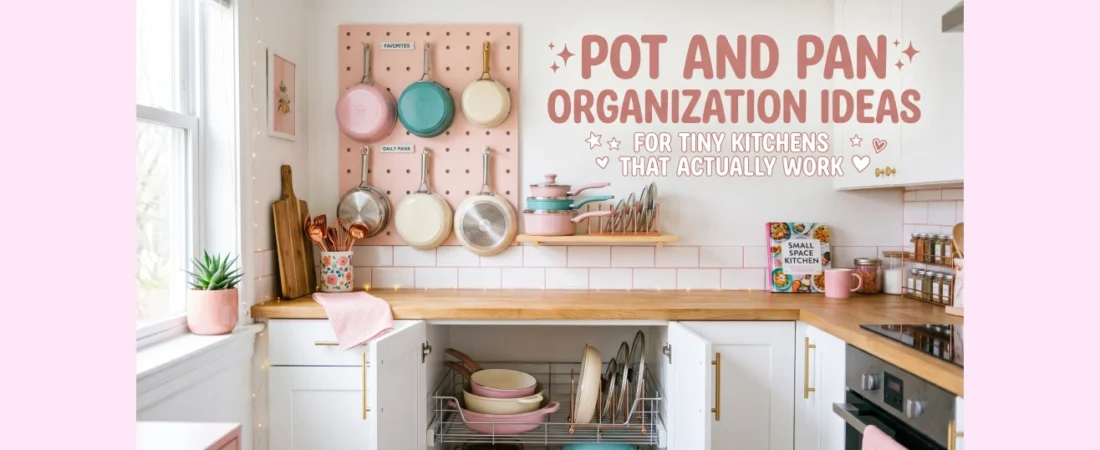
My favorite solution is installing a ceiling-mounted pot rack above my kitchen island. It keeps my most-used cookware within arm’s reach while freeing up precious cabinet space. If you don’t have an island, a wall-mounted rack works beautifully too – I had one in my previous apartment right next to the stove.
💡 Pro Tip: Hang pots and pans by their handles rather than stacking them. This prevents scratching and makes each piece instantly accessible.
Another vertical trick I swear by is using a pegboard system on an empty wall. You can customize the hooks to fit your specific cookware, and it looks surprisingly stylish. I painted mine the same color as my kitchen walls, so it feels intentional rather than utilitarian.
🏠 Cabinet Organization Strategies That Actually Work
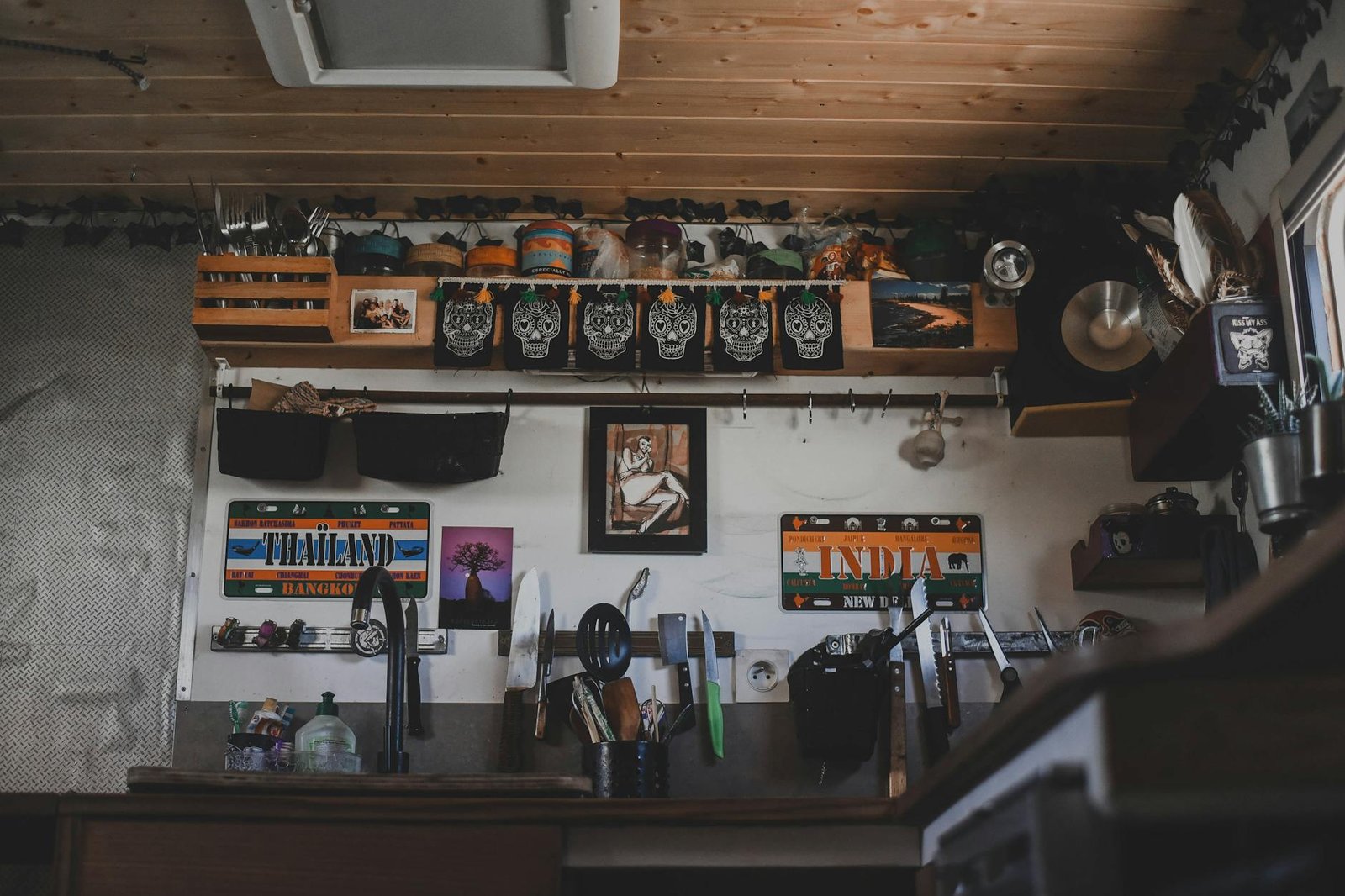
Let’s be real – not everyone can hang pots from the ceiling. When I lived in a rental where modifications weren’t allowed, I had to get creative with cabinet storage. The secret is treating your cabinets like a filing system rather than a storage dump.
I organize my pots and pans by frequency of use and size. My everyday skillets live in the most accessible cabinet at eye level, while my large stockpot (used maybe twice a month) sits up high. This system has saved me countless minutes of searching and prevented so many cabinet avalanches!
For deep cabinets, I use wire rack dividers to create slots for each pan. Think of it like organizing files in a filing cabinet – each pot has its designated spot. No more digging to the back or having everything tumble out when you grab one item.
📖 Remember: Store pots and pans with their bottoms facing the same direction to maximize stack stability and prevent scratching of non-stick surfaces.
If you’re dealing with other challenging storage areas in your home, the same principles apply. Just like I approach organizing kitchen cabinets with deep shelves, the key is creating systems that prevent items from getting lost in the back.
🥘 The Lid Storage Game-Changer
Honestly, lids were my biggest kitchen organization nemesis until I discovered this trick. Instead of trying to keep lids with their matching pots (which never worked for me), I created a dedicated lid storage area.
I installed thin wire racks on the inside of a cabinet door specifically for lids. They stand vertically like books on a shelf, and I can see every single one at a glance. This method works especially well in tiny kitchens because cabinet door space is often underutilized.
🍴 Drawer Solutions for Maximum Efficiency
If you’re lucky enough to have deep drawers in your tiny kitchen, they’re absolute goldmines for pot and pan storage. I prefer drawers over cabinets for cookware because you can see everything without having to crouch down or move other items.
My drawer organization follows the same principle I use for kitchen drawer organization ideas – everything has a specific home. I use adjustable dividers to create custom-sized sections for different pans. My cast iron skillet has its own corner, my saucepans nest together in the middle, and my lids stand in a designated section along one side.
🔧 Creative Uses for Drawer Dividers
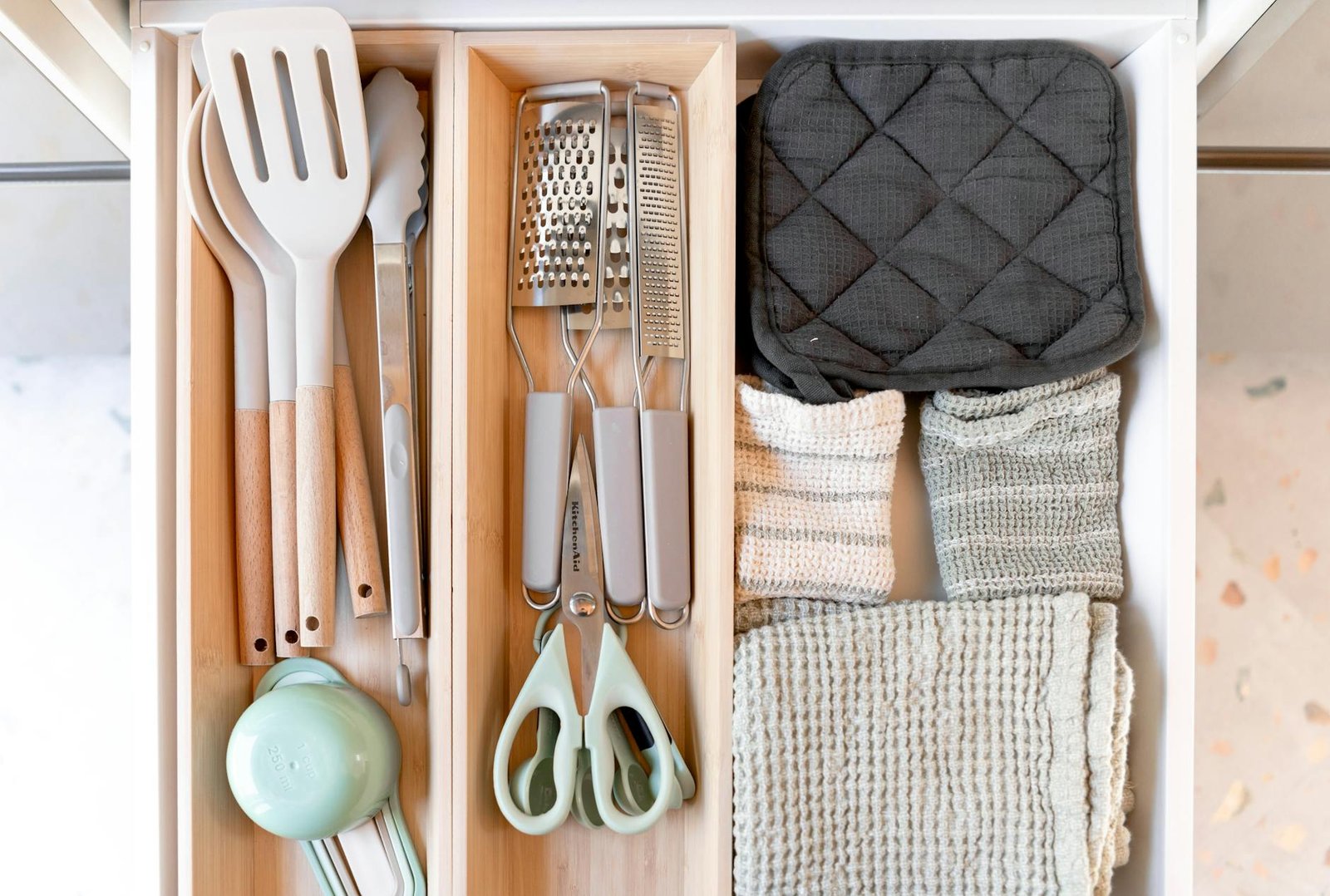
I’ve found that expandable drawer dividers aren’t just for utensils – they’re perfect for separating different types of cookware too. In my deepest drawer, I have one section for skillets, another for saucepans, and a third for specialty items like my wok and steamer insert.
The key is measuring your drawer and your cookware before setting up dividers. I learned this the hard way when my first attempt left me with sections that were either too big or too small for my actual pans!
💡 Smart Stacking and Nesting Techniques
When space is at a premium, how you stack matters just as much as where you stack. I’ve learned that not all cookware nests well together, and forcing pieces to fit can damage non-stick coatings or create unstable towers.
My rule is to only nest cookware of the same material and similar shapes. My stainless steel saucepans nest beautifully together, but I keep my non-stick skillets separate to prevent scratching. Between each nested piece, I place a soft cloth or paper towel to prevent wear.
For oddly-shaped items like my roasting pan or large stockpot, I store them in the most inconvenient spots since I use them less frequently. This leaves prime real estate for my everyday cookware.
🎯 Magnetic and Hook Solutions
One of my favorite discoveries has been using magnetic strips for smaller metal cookware accessories. I have a magnetic strip on the side of my refrigerator that holds my measuring spoons, small strainers, and even lightweight pans.
Under-cabinet hooks are another space-saver I wish I’d discovered sooner. I have a row of hooks under my upper cabinets that hold my most-used skillets. They’re out of the way but immediately accessible when I’m cooking.
🤔 FAQ
How do I prevent my pots and pans from getting scratched when stacked?
Place a soft cloth, paper towel, or pan protector between each piece when stacking. I keep a stack of old dish towels specifically for this purpose. Also, avoid stacking different materials together – keep stainless steel with stainless steel and non-stick with non-stick.
What’s the best way to store lids in a tiny kitchen?
Store lids vertically rather than horizontally to save space. I use wire racks inside cabinet doors or create a dedicated lid section in a drawer. This way, you can see all your lids at once and grab the one you need without moving others.
Should I hang heavy cast iron pans on wall hooks?
Only if your wall can support the weight and you have proper wall anchors. I hang my lighter pans on hooks but keep my heavy cast iron in a lower cabinet drawer to avoid any safety issues. Test the weight capacity of your hooks before hanging heavy cookware.
How do I organize pots and pans when I have very limited cabinet space?
Focus on multi-purpose cookware and consider storing some items outside the kitchen if possible. Use every available vertical space, including cabinet doors and walls. Sometimes storing seasonal or rarely-used items elsewhere (like a hall closet) can free up kitchen space for everyday essentials.
🏡 Making It Work for Your Space
The truth is, every tiny kitchen is different, and what works in my space might need tweaking for yours. The important thing is to start with one area – maybe your most problematic cabinet or drawer – and experiment with different organizational methods.
Just like when I tackled organizing other challenging spaces in my home, the key to success with pot and pan organization is consistency. Once you establish a system, stick with it. Put things back in their designated spots immediately after washing, and your tiny kitchen will stay organized with minimal effort.
Remember, an organized kitchen isn’t about having the perfect setup – it’s about creating a system that works for how you actually cook. My pot and pan organization has evolved over the years as my cooking habits changed, and that’s perfectly normal.
🌟 Conclusion
Living with a tiny kitchen doesn’t mean compromising on your cooking game. With these pot and pan organization ideas, you can create a space that’s both functional and enjoyable to work in. The key is thinking creatively about every available inch and organizing based on how you actually use your cookware.
Start small, experiment with different solutions, and don’t be afraid to adjust your system as needed. Your tiny kitchen can be just as organized and efficient as any larger space – sometimes even more so!
What pot and pan organization challenges are you facing in your tiny kitchen? I’d love to hear about your space and help you brainstorm solutions that might work. Share your biggest cookware storage frustration in the comments below!