Quick Answer
Transform your counter-less kitchen by going vertical with wall-mounted storage, utilizing cabinet doors, creating mobile prep stations, and maximizing every drawer. Focus on decluttering first, then implement smart storage solutions like magnetic strips, over-sink cutting boards, and stackable organizers.
I’ll be honest with you – living in a small kitchen with virtually no counter space used to drive me absolutely crazy. When I first moved into my tiny apartment, I spent more time shuffling items around just to find a place to chop an onion than actually cooking. But over the years, I’ve learned that limited counter space doesn’t have to mean limited functionality.
Through trial and error (and a few organizational breakdowns), I’ve discovered that organizing a small kitchen is really about thinking creatively and maximizing every single inch. Let me share the strategies that completely transformed my cooking space from chaotic to calm.
🧹 Start With a Ruthless Declutter
Before we dive into storage solutions, I need to tell you something that might sting a little: you probably have too much stuff. I know, I know – but hear me out. In my experience, the first step to organizing any small kitchen is being brutally honest about what you actually need and use.
I started by removing everything from my kitchen – and I mean everything. Counters, cabinets, drawers, the works. Then I sorted items into three piles: use daily, use weekly, and use rarely. That third pile? Most of it had to go. Those specialty gadgets I bought with the best intentions but never touched? Gone. The duplicate measuring cups? Donated. The chipped dishes I was “saving”? Trash.
💡 Pro Tip: If you haven’t used something in the past six months, you probably don’t need it taking up precious space in your small kitchen. Be ruthless – your future self will thank you.
🏗️ Go Vertical With Wall Storage
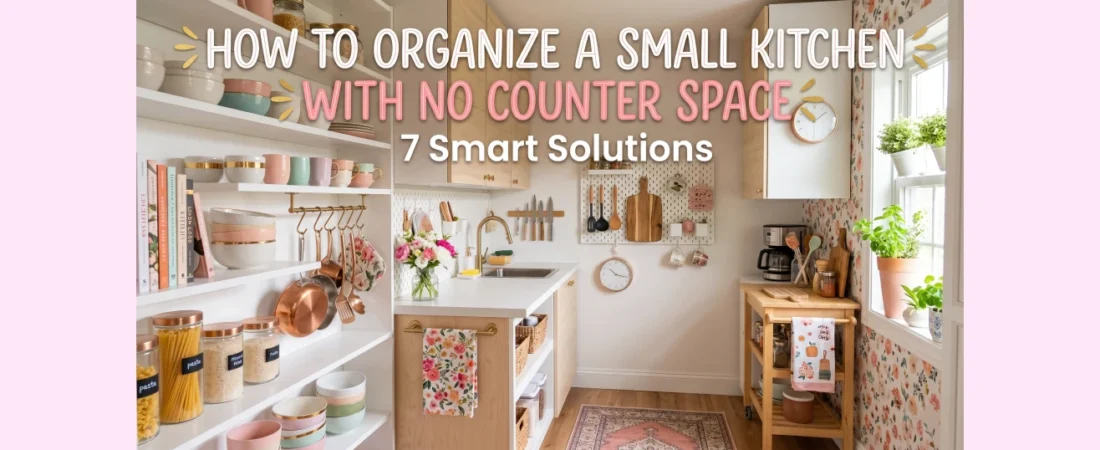
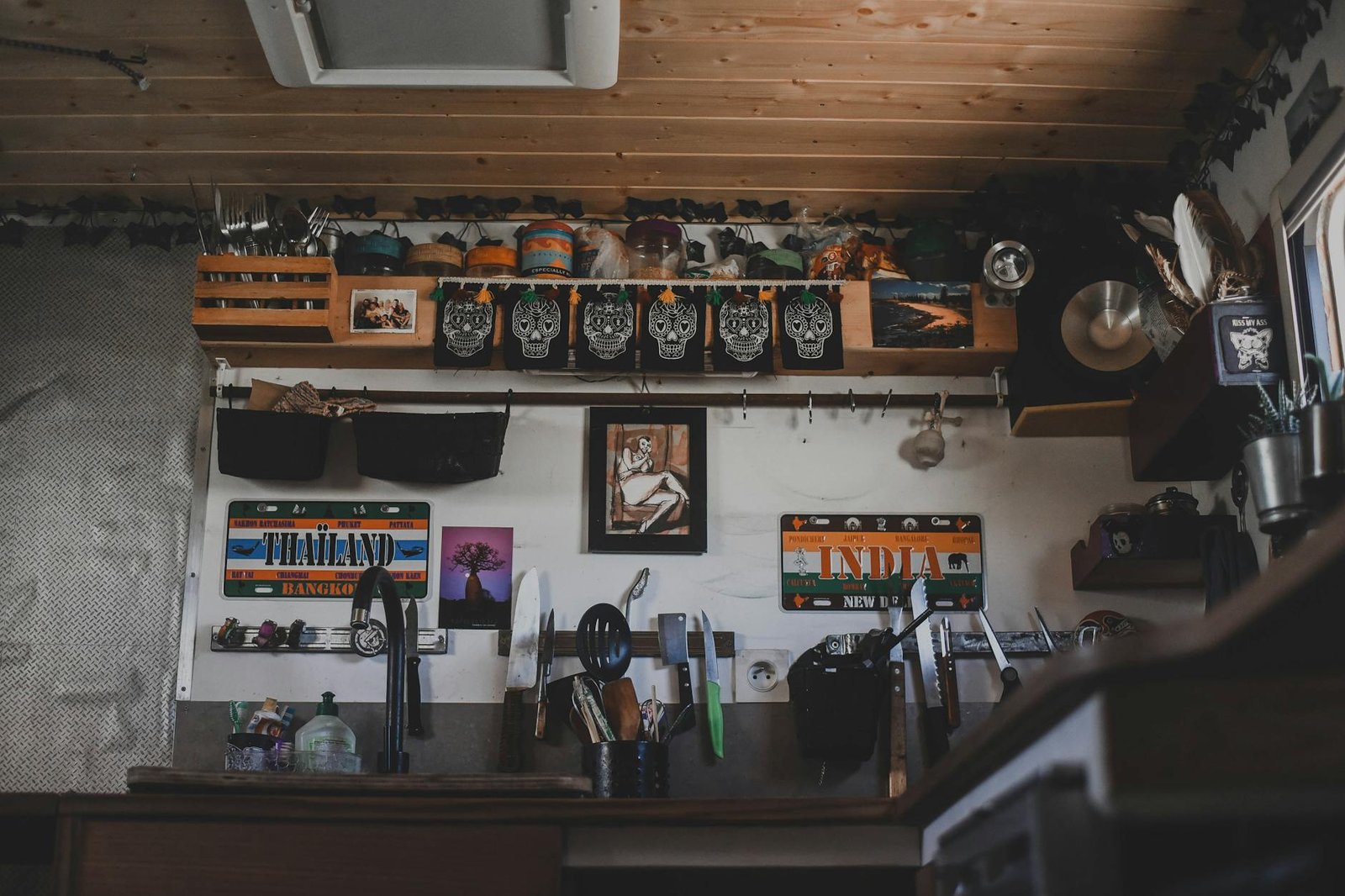
When you don’t have counter space, your walls become your best friend. I installed a magnetic knife strip on the wall next to my stove, and it freed up an entire drawer. Magnetic spice containers stick right to the side of my refrigerator, and I use a pegboard system for hanging pots, pans, and utensils.
The key is thinking of your walls as storage real estate. I even mounted a small cutting board holder on the wall – it keeps my cutting boards accessible but completely out of the way. Wall-mounted paper towel holders and small shelves for frequently used items have been game-changers.
🪝 Maximize Cabinet Door Potential
Don’t overlook the inside of your cabinet doors! I installed narrow wire racks on the inside of several cabinet doors for storing spices, cleaning supplies, and small containers. It’s amazing how much storage space you can create just by utilizing these often-forgotten areas.
Similar to my approach for organizing under the kitchen sink, I use the cabinet door space for items I need regularly but don’t want cluttering up my limited surfaces.
🛞 Create Mobile Prep Stations
One of my best discoveries was investing in a small kitchen cart with wheels. This little mobile island has become my prep station, coffee station, and extra storage all rolled into one. I can wheel it wherever I need it, then tuck it away when I’m done.
I also use a large cutting board that fits perfectly over my sink. When I need prep space, I place it across the sink, and suddenly I have a temporary counter. It’s been a lifesaver for meal prep sessions.
📖 Remember: Mobile solutions are perfect for small kitchens because they give you flexibility. You can create counter space when you need it and store everything away when you don’t.
📦 Master Your Drawer Organization
When counter space is limited, your drawers need to work overtime. I learned this lesson the hard way after constantly digging through messy drawers looking for basic tools. Now I use drawer dividers religiously, and every single item has a designated spot.
My kitchen drawer organization system includes separate compartments for different types of utensils, with the most frequently used items in the top drawer closest to my main work area. I also use deep drawers for storing small appliances that would otherwise clutter precious counter space.
🥄 Implement the “One In, One Out” Rule
In a small kitchen, every new item needs to earn its place. I’ve adopted a strict “one in, one out” policy – if something new comes into my kitchen, something else has to go. This prevents the gradual accumulation of stuff that inevitably leads to clutter.
🏺 Optimize Cabinet Storage
Your cabinets are prime real estate in a small kitchen, so every inch counts. I use stackable containers for dry goods, which not only keeps things organized but also maximizes vertical space within each cabinet. Clear containers are essential – I need to see what I have at a glance.
For deeper cabinets, I’ve learned that organizing kitchen cabinets with deep shelves requires pull-out organizers or turntables to prevent items from getting lost in the back. I also use shelf risers to create two levels of storage where there was previously just one.
🔄 Utilize Awkward Spaces
Every small kitchen has those weird, awkward spaces that seem impossible to use effectively. I’ve learned to embrace these challenging spots and turn them into storage gold mines. The narrow space between my refrigerator and wall? Perfect for a slim rolling cart that holds oils, vinegars, and tall items.
The area above my refrigerator, which I used to ignore, now houses my small pantry organization system with bins for items I don’t use daily but need to keep accessible.
🧊 Maximize Appliance Storage
Small appliances are the enemy of counter space, but I still need my coffee maker and toaster. My solution? I created appliance garages in my lower cabinets. I can slide them out when needed and tuck them away when I’m done.
For appliances I use daily, I designate specific spots on my mobile cart or on shelving that keeps them accessible but not taking up precious prep space. The key is being honest about what you actually use regularly versus what you think you might use someday.
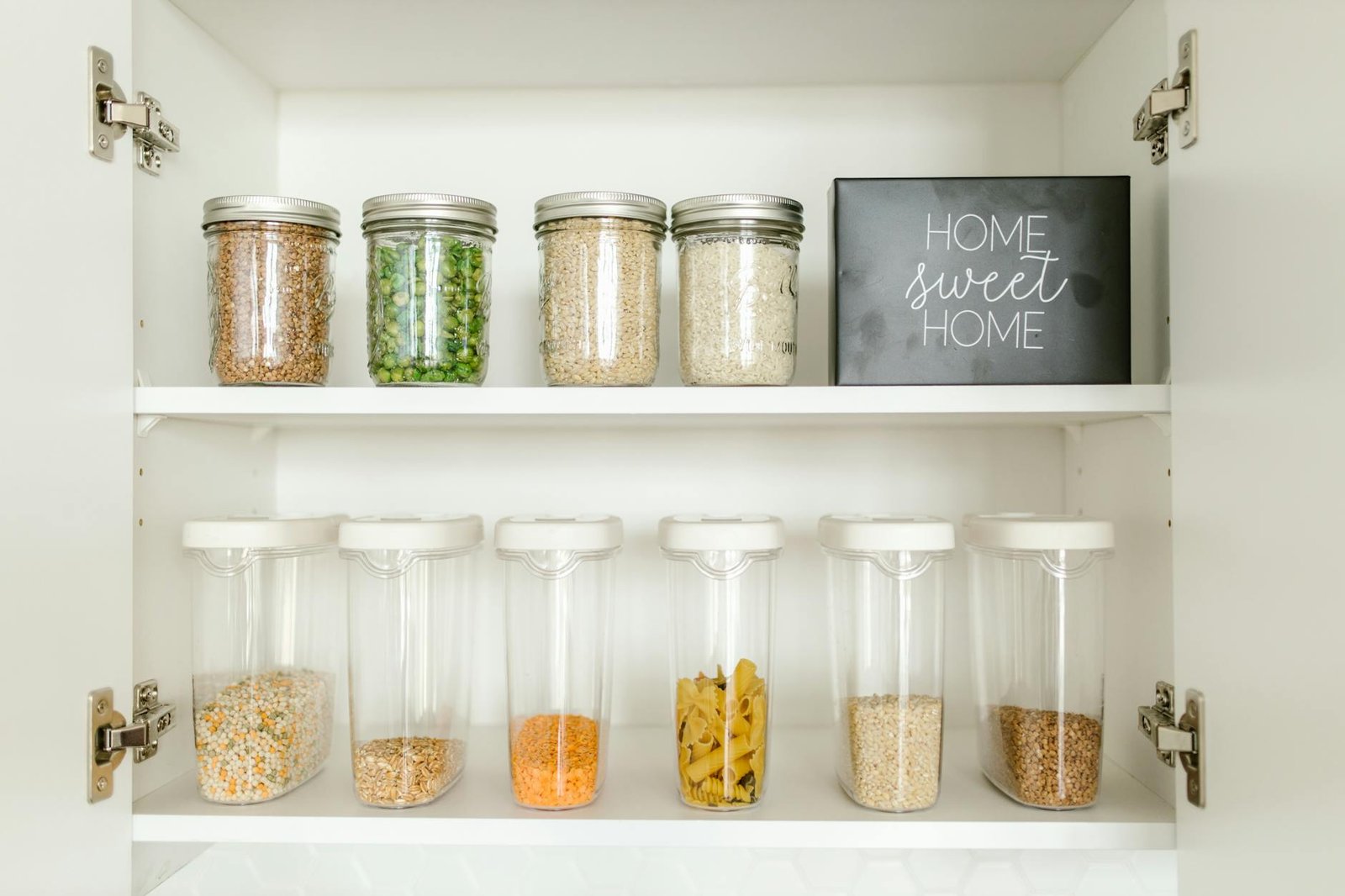
Every inch of cabinet space optimized with containers, organizers, and door storage
🏃♀️ Develop Efficient Workflows
Honestly, organizing a small kitchen isn’t just about storage – it’s about creating workflows that make sense. I’ve learned to group items by function rather than by type. My coffee station has everything I need for my morning routine in one area. My cooking zone has prep tools, spices, and oils within arm’s reach.
💡 Game Changer: Think about your cooking process and organize accordingly. If you always grab olive oil, salt, and pepper together, store them together.
❓ Frequently Asked Questions
How do I create counter space when I have absolutely none?
Focus on temporary solutions like over-sink cutting boards, pull-out cutting board drawers, and mobile kitchen carts. I also use my stovetop as prep space when it’s not in use, with a large cutting board that covers the burners.
What’s the biggest mistake people make in small kitchen organization?
In my experience, it’s trying to keep too much stuff. Small kitchens require ruthless editing. Every item needs to earn its place by being genuinely useful and regularly used.
How do I keep my small kitchen organized long-term?
Develop the habit of cleaning as you go and returning items to their designated spots immediately. I also do a quick 10-minute reset every evening to ensure everything stays in its place.
Should I prioritize function or aesthetics in a small kitchen?
Function first, always. In a small space, every item needs to work hard. That said, organized spaces naturally look better, so focusing on function often improves aesthetics as a bonus.
Your Small Kitchen Can Work Better Than You Think
Living with a small kitchen and no counter space doesn’t have to mean sacrificing your love of cooking or feeling constantly frustrated. Through careful decluttering, creative storage solutions, and smart workflow planning, you can create a kitchen that feels spacious and functions beautifully.
The transformation won’t happen overnight, and it definitely requires some tough decisions about what stays and what goes. But I promise you, once you implement these strategies and stick with them, you’ll wonder how you ever managed with a cluttered, disorganized space.
Remember, organization is an ongoing process, not a one-time project. Be patient with yourself as you figure out what works best for your specific space and cooking style. Every small kitchen is unique, and what works perfectly for me might need tweaking for your situation.
What’s your biggest challenge with your small kitchen? I’d love to hear about your space and help you brainstorm solutions in the comments below!