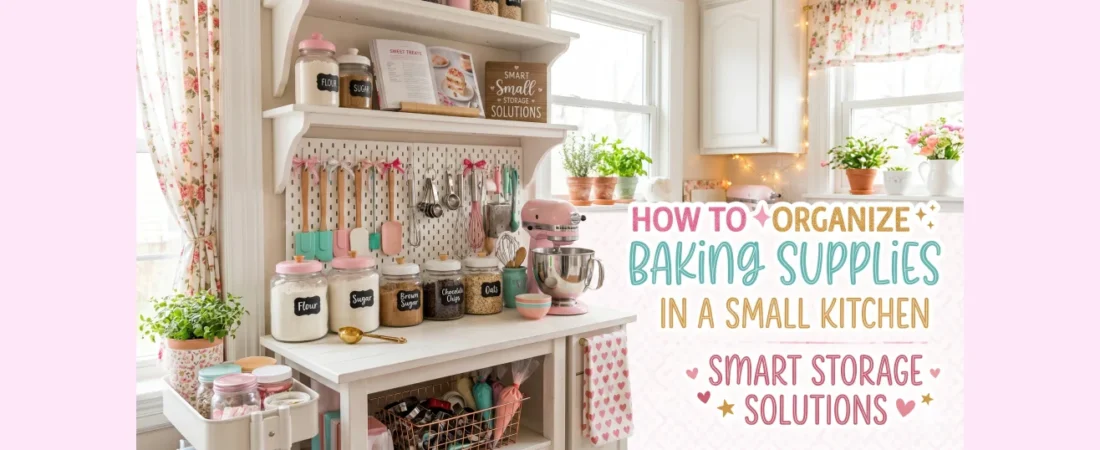
Quick Answer 📝
Maximize vertical space with stackable containers for dry ingredients, designate one drawer for essential tools, use cabinet door storage for measuring items, and create a dedicated baking station with all supplies within arm’s reach. Group similar items together and label everything clearly.
I’ll be honest with you – organizing baking supplies in a small kitchen used to drive me absolutely crazy! Between the flour explosions, scattered measuring cups, and that one mixing bowl that somehow always ended up in the wrong cabinet, my tiny kitchen felt chaotic every time I wanted to whip up cookies or a cake.
But after years of trial and error (and more than a few baking disasters caused by missing ingredients), I’ve discovered some game-changing strategies that transformed my cramped kitchen into a surprisingly efficient baking paradise. Let me share what actually works!
Start with a Reality Check 🤔
Before diving into organization systems, I had to get brutally honest about my baking habits. Do I really need three different types of vanilla extract? (The answer was no.) Am I actually going to use that specialty cake flour I bought two years ago? (Also no.)
I recommend taking everything out of your cabinets and drawers – yes, everything baking-related. Sort items into three piles: use regularly, use occasionally, and haven’t touched in ages. That third pile? Time to let it go. This decluttering step freed up so much space that I could actually implement organizational systems that work.
💡 Pro Tip: If you haven’t used a baking ingredient or tool in the past year, you probably won’t miss it. Be ruthless in your decluttering – your future self will thank you!
Create Zones That Make Sense 🎯
The biggest game-changer for me was creating specific zones for different types of baking supplies. I used to have measuring cups scattered across three different drawers, which meant I was constantly hunting for the right size when I needed to measure flour.
Now I have four distinct zones:
- Dry Ingredients Zone: All flour, sugar, baking powder, etc. in one area
- Tools Zone: Measuring cups, spoons, mixers, and utensils
- Bakeware Zone: Pans, sheets, muffin tins
- Decorating Zone: Sprinkles, food coloring, piping bags
This zoning approach works similarly to how I organize other areas of my home. Just like I learned from organizing under my kitchen sink, keeping related items together saves so much time and frustration.
Master the Art of Vertical Storage 📚
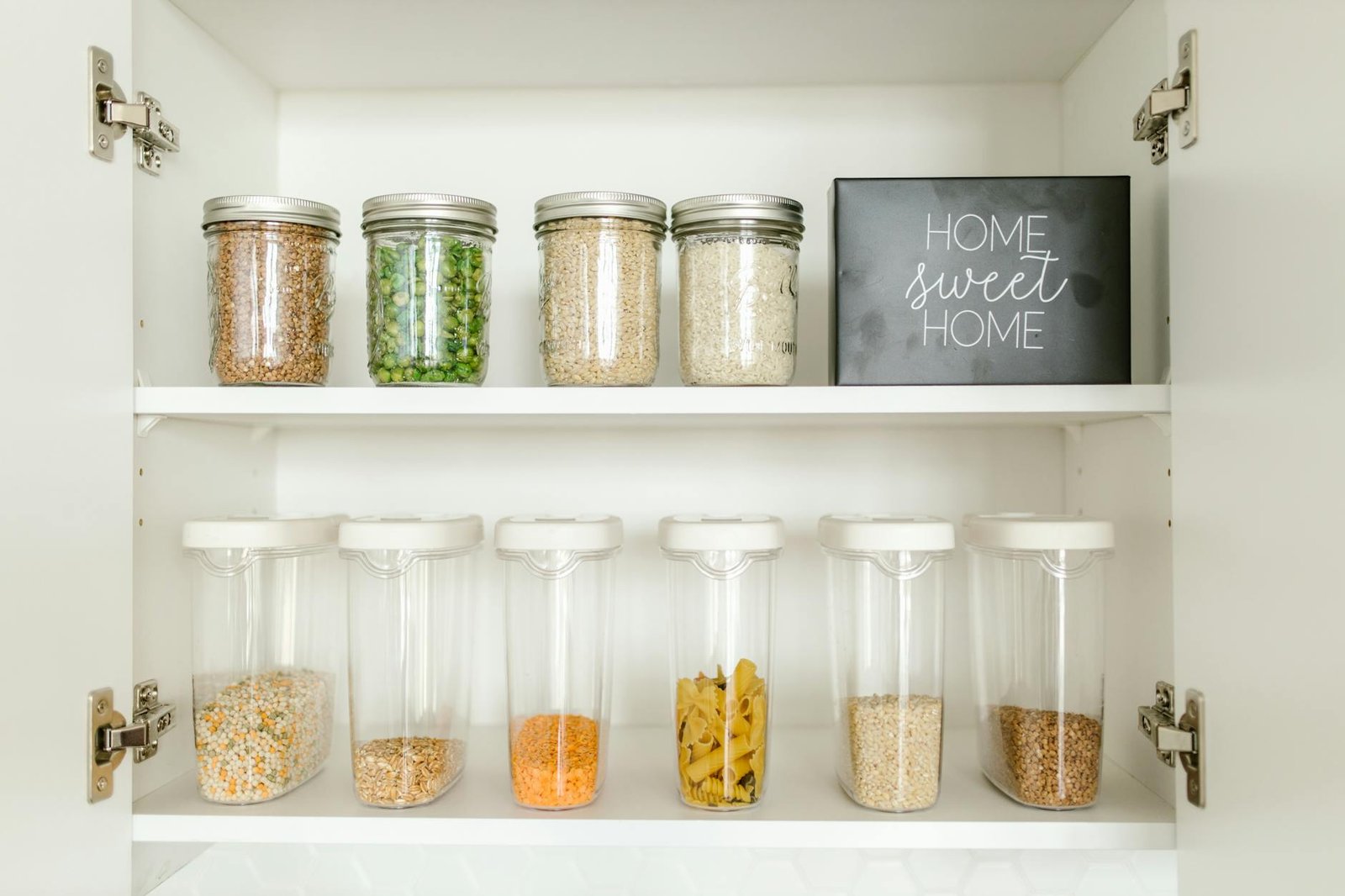
In my tiny kitchen, floor space is precious, so I had to think upward. Stackable clear containers became my best friends – I can see exactly what’s inside and stack them efficiently to maximize cabinet height.
For flour, sugar, and other dry ingredients, I use airtight containers that nest together when empty. This was a revelation! When I’m not actively baking, the containers take up minimal space, but when I need them, everything stays fresh and organized.
I also installed narrow shelves inside cabinet doors for spices and small items like baking powder and vanilla extract. These door-mounted organizers were surprisingly easy to install and opened up so much space in my main cabinet areas.
Smart Container Choices 📦
Not all storage containers are created equal, especially in small spaces. Here’s what I’ve learned works best:
- Square or rectangular containers: They use space more efficiently than round ones
- Clear containers: You can see what’s inside without opening everything
- Modular systems: Containers that stack and fit together like puzzle pieces
- Labels: Even if containers are clear, labels prevent confusion
📖 Storage Reality Check: I used to think fancy containers would automatically make me more organized. The truth? Simple, consistent containers that actually fit your space work much better than beautiful ones that don’t stack properly.
Optimize Your Drawers 🗂️
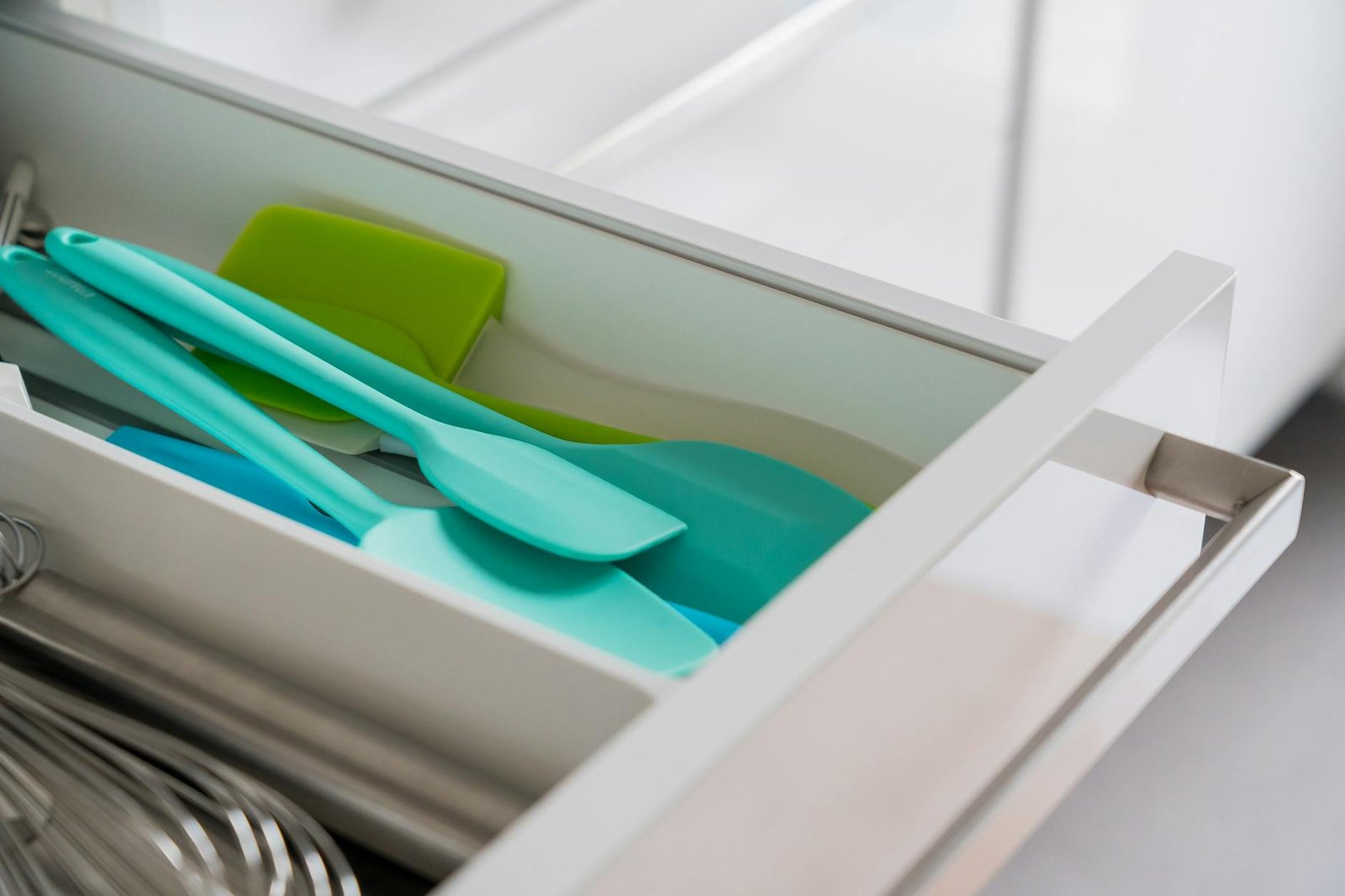
Drawer organization for baking supplies requires some strategic thinking. I designated my deepest drawer as my main baking tools drawer and invested in adjustable drawer dividers. This keeps measuring cups, spoons, whisks, and spatulas from becoming a tangled mess.
In my experience, the key is giving each tool a specific spot. My measuring cups nest together in one section, measuring spoons have their own small compartment, and larger tools like whisks and wooden spoons stand upright in a separate area.
For bakeware, I store cookie sheets and baking pans vertically using tension rods or wire dividers. This prevents the annoying avalanche that used to happen every time I tried to grab a single pan from a stack.
Make Use of Unexpected Spaces 🕳️
Small kitchens require creative thinking about storage locations. I’ve found several unexpected spots that work beautifully for baking supplies:
Inside Cabinet Doors 🚪
The inside of cabinet doors is prime real estate that often goes unused. I mounted narrow spice racks here for vanilla extract, food coloring, and other small bottles. I also hung measuring cup sets on small hooks.
Under Cabinet Storage 📎
The space under upper cabinets can hold lightweight items beautifully. I installed small baskets here for items I use frequently, like measuring spoons and small mixing bowls.
Pull-Out Solutions 🛤️
Similar to the pull-out systems that work so well for organizing under the kitchen sink, I added a sliding organizer to my deepest cabinet. This makes it easy to access items stored in the back without having to remove everything in front.
Create a Portable Baking Station 🧺
One of my favorite discoveries is keeping a dedicated baking basket or caddy with my most frequently used items. When I’m ready to bake, I can grab this portable station and have everything I need in one place.
My baking caddy includes:
- Measuring cups and spoons
- Vanilla extract
- Baking powder and soda
- Salt
- Basic mixing bowls
- Essential utensils like whisks and spatulas
This approach works especially well in small kitchens because you can clear your limited counter space when you’re done baking by simply returning the caddy to its storage spot.
Maintain Your System 🔄
Honestly, the prettiest organization system in the world won’t help if you don’t maintain it. I’ve learned to build maintenance into my baking routine:
- Return items to their designated spots immediately after use
- Refill containers before they’re completely empty
- Do a quick organization check monthly
- Reassess what’s working and what isn’t every few months
The key is making the system so intuitive that maintaining it feels natural rather than like a chore.
💡 Maintenance Tip: I keep a small handheld vacuum in my kitchen specifically for flour spills. Quick cleanup prevents the mess from spreading and keeps my organized spaces looking tidy.
Frequently Asked Questions
How do I prevent flour and sugar from going stale in small containers?
I always use airtight containers and add bay leaves to flour containers to prevent pests. For items I don’t use frequently, I store them in the freezer to maintain freshness longer.
What’s the best way to organize baking sheets in a small kitchen?
Store them vertically using tension rods or wire organizers inside cabinets. This prevents stacking and makes it easy to grab just one sheet without disturbing others.
How can I make my baking supplies more accessible if I’m short?
Keep frequently used items at eye level or below. Use pull-out drawers or lazy Susans in deep cabinets, and consider a sturdy step stool that can slide under cabinets when not in use.
Should I store opened baking ingredients in original packaging or transfer them?
I transfer everything to airtight containers for better organization and freshness. I keep the original packaging information by cutting out the label and taping it to the container or taking a photo for reference.
Your Small Kitchen Can Work Beautifully
Organizing baking supplies in a small kitchen doesn’t have to feel impossible. With some strategic planning, creative storage solutions, and a system that actually fits your space and habits, you can create a functional baking area that makes you excited to whip up your favorite treats.
The key is working with your kitchen’s limitations rather than against them. Every small kitchen is different, so don’t be afraid to adapt these ideas to fit your specific space and baking style.
What’s your biggest challenge when it comes to organizing baking supplies? I’d love to hear about your small kitchen victories and struggles in the comments below – sometimes the best solutions come from sharing our experiences with fellow home bakers!