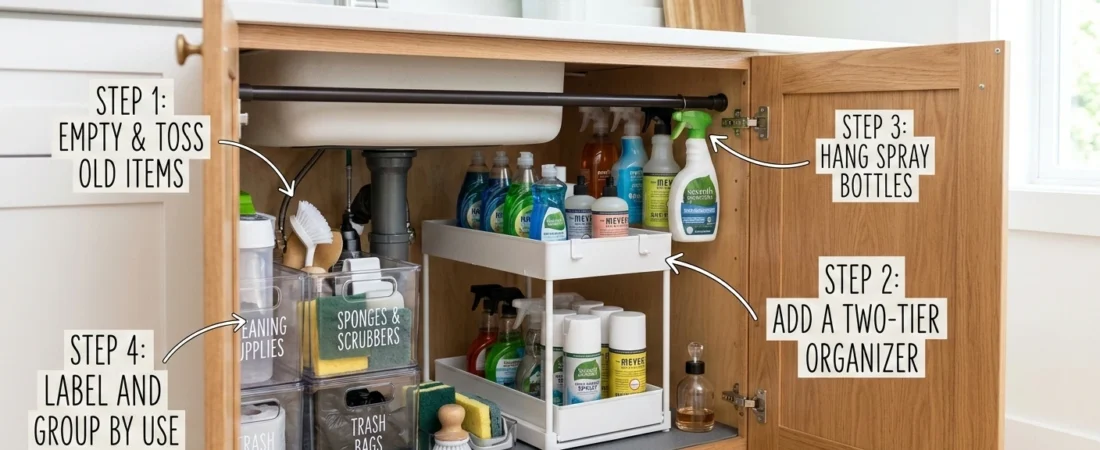
 How to Organize Under the Kitchen Sink (Step-by-Step)
Last March, I spent twenty minutes on my hands and knees searching for the refill bottle of dish soap I knew I’d bought. It was there. Somewhere. Behind three half-empty bottles of the same all-purpose spray, a sponge still in its packaging from who-knows-when, and a garbage bag I’d shoved under there “temporarily” six months ago. I found the soap eventually. It had tipped over and was wedged horizontally behind the pipe, empty side up, completely drained onto the cabinet floor.
That was the moment I actually fixed under my sink. Not because I wanted a Pinterest-worthy cabinet. Because I was tired of losing things in a space that’s literally two feet wide.
Here’s what I did and what actually worked.
Why Under the Kitchen Sink Is the Hardest Cabinet to Keep Organized
The space is genuinely awkward and people don’t talk about that enough. You’ve got pipes running through the middle, a garbage disposal eating up the left corner, and a weird sloped back wall in most cabinets that makes nothing sit flat. It’s not that you’re disorganized. The space is just designed badly.
Three things keep making it worse:
- No zones. Everything gets shoved in together so finding anything means moving everything.
- Vertical space ignored. The floor gets packed, but there’s usually 12–14 inches of empty air above everything.
- Out of sight, out of mind. You skip it during regular tidying. Clutter multiplies fast in the dark.
Understanding why it’s hard is actually the first step to fixing it for good.
Step-by-Step: Under Kitchen Sink Organization That Actually Works
Step 1: Empty Everything Yes, Everything
Pull it all out. Don’t tidy it in place. Put it on the kitchen floor so you can see what you’re actually dealing with before you buy a single thing.
Check expiration dates on cleaning products they absolutely do expire and most people have no idea. I threw away four bottles during this step alone, including a “antibacterial” spray that expired in 2023. Once it’s all out, sort into three piles: keep, toss, donate.
Don’t skip this. Organizing around clutter just hides it.
Step 2: Measure Before You Do Anything Else
This is the step I skipped the first time I tried to fix this cabinet. I bought a two-tier organizer without measuring and spent forty minutes trying to make it fit around the pipe before returning it.
Measure the height on each side of the pipe separately they’re often different. Measure the depth too. Snap a photo with a tape measure in frame so you have it when you’re shopping on your phone at the store. This five-minute step will save you two returns.
Step 3: Get a Two-Tier Sliding Organizer But Not Just Any One
Okay so here’s where I have a strong opinion. Most “under sink organizers” sold as complete solutions are too wide, too shallow, or built for a cabinet without a garbage disposal. I tried three before finding one that actually fit my setup.
The one that worked for me: the SimpleHouseware 2-Tier Sliding Cabinet Basket Organizer I paid $24.99 on Amazon in February. It’s adjustable width (fits 11.5″ to 19.5″), the bottom tier slides out independently, and it’s sturdy enough to hold a full bottle of Windex without wobbling. Put daily-use items on the top tier. Backup stock on the bottom.
I used to think any two-tier organizer would do the same job. After going through three of them, I now think the adjustable width feature is non-negotiable if you have pipes in the way.
Step 4: Hang Your Spray Bottles This One Actually Surprised Me
I was skeptical about the tension rod hack when I first saw it. It looks too simple. It looks like it won’t hold. It holds.
A standard tension rod the kind used for shower curtains, costs around $7–$8 mounted inside the cabinet near the top creates instant hanging storage for every spray bottle you own. Hang them by the trigger handle. They stay upright, stay visible, and free up the entire floor of the cabinet for bins.
One rod. Five minutes. It works better than anything I paid more for.
Step 5: Group and Label Everything by Use
Before putting anything back, decide on clear categories and stick to them:
- Dish & sink: dish soap, sponges, scrub brushes
- Cleaning sprays: all-purpose, glass cleaner, disinfectant
- Trash supplies: bags, ties, backup rolls
- Backstock: refills only, nothing else
Label each zone. A basic label maker (I use the Brother P-Touch PTM95, around $18) or even masking tape with a Sharpie is enough. When everything has a home, putting things back takes ten seconds instead of a guessing game.
Best Products That Actually Fit Under a Sink (All Under $30)
Here’s what I’ve personally used or tested no filler picks:
| Product | Why It’s Worth It | Price |
|---|---|---|
| SimpleHouseware 2-Tier Sliding Organizer | Adjustable width, fits around pipes | ~$25 |
| Tension Rod (2-pack, AmazonBasics) | Hanging spray storage, shockingly sturdy | ~$8 |
| Yamazaki Clear Stackable Bins | Stays clean, easy to wipe down | ~$16 |
| Command Medium Hooks (pack of 6) | Hang sponges to dry, no drilling | ~$7 |
| Lazy Susan Turntable (10″) | Good for one specific thing — read below | ~$18 |
On the lazy susan: I want to be clear here. For most under-sink setups, a lazy susan is actually a waste of space. The cabinet is too narrow and the pipe placement makes it spin into obstruction. I tried one. It lasted two weeks before I replaced it with a simple bin. The only situation where it makes sense is if your sink has no garbage disposal and you have a wide, symmetrical cabinet then it’s great. Otherwise skip it.
Common Mistakes to Avoid
Buying before measuring. I’ve said it twice because I’ve done it twice.
Storing non-cleaning items here. Batteries, tools, rubber bands they creep in and suddenly you can’t find your dish soap again. Give those things a proper home somewhere else and defend the cabinet’s purpose.
Skipping the purge. Neat clutter is still clutter. The system won’t work if you’re organizing around things you don’t use.
Ignoring vertical space. The floor gets full fast. The tension rod and a two-tier organizer solve this. Use them together and you’ll double your usable space without touching the footprint.
How to Keep It Organized Long-Term (Realistic Version)
The system only works if maintaining it is easier than letting it fall apart. Four habits that take under five minutes each:
- First of the month sweep: Remove anything expired or empty. Takes ninety seconds.
- One-in, one-out rule: Before adding a new cleaner, finish or toss an old one.
- Restock trigger: The moment you grab the last of something, add it to your shopping list. Not later. Now.
- Sunday reset: Sixty seconds putting anything out of place back where it belongs. That’s it.
Consistency beats a perfect system every time. An okay system you actually maintain will always beat a beautiful one you abandon after three weeks.
Once you’ve tackled the sink cabinet, the pantry is usually the next disaster zone. I went through the same process there and it made a bigger difference than I expected here’s exactly how I did it: https://secretstribe.com/ultimate-pantry-organization-system-small-spaces/