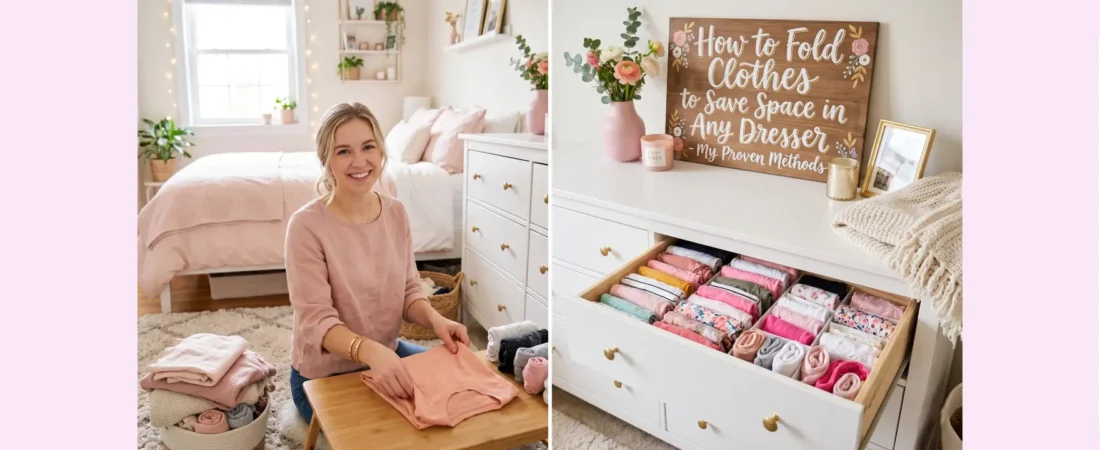
Quick Answer
The most effective space-saving folding techniques include the KonMari vertical fold for t-shirts, rolling method for casual clothes, flat-fold for dress shirts, and bundle wrapping for bulky items. These methods can increase dresser capacity by 30-50% while keeping clothes wrinkle-free and easily accessible.
I’ll be completely honest with you – I used to be terrible at folding clothes. My dresser drawers were chaotic mountains of fabric that made finding anything a frustrating treasure hunt. But over the years, I’ve discovered folding techniques that not only save incredible amounts of space but actually make my life easier. Today, I’m sharing every method that’s genuinely transformed my clothing storage.
🎯 Why Proper Folding Makes All the Difference
In my experience, the way you fold your clothes is just as important as organizing any other space in your home. I’ve learned that good folding techniques serve three purposes: they maximize space, minimize wrinkles, and make everything easily visible and accessible.
When I first started paying attention to my folding habits, I realized I was wasting about 40% of my dresser space with sloppy, bulky folds. Now, I can fit nearly twice as much in the same drawers, and everything stays neat and organized.
💡 Pro Tip: The key to space-saving folding isn’t just technique – it’s consistency. Once you find methods that work for your clothes and dresser, stick with them religiously.
👕 The Vertical T-Shirt Fold (My Go-To Method)
This is honestly the folding technique that changed everything for me. Instead of stacking t-shirts horizontally where you can only see the top one, I fold them to stand upright like files in a filing cabinet.
Here’s my exact process:
- Lay the t-shirt face down on a flat surface
- Fold one side toward the center, bringing the sleeve across the back
- Repeat with the other side
- Fold the bottom hem up about one-third of the way
- Fold again so the shirt stands upright in a compact rectangle
The result? I can see every single shirt at a glance, and I fit about three times as many in each drawer. It took me a week to get the sizing right, but now I can fold a shirt this way in under 30 seconds.
🌀 Rolling Technique for Casual Wear
For casual clothes like workout gear, pajamas, and loungewear, rolling is my absolute favorite space-saving method. I discovered this technique when I was trying to pack more efficiently for trips, but it works brilliantly in dressers too.
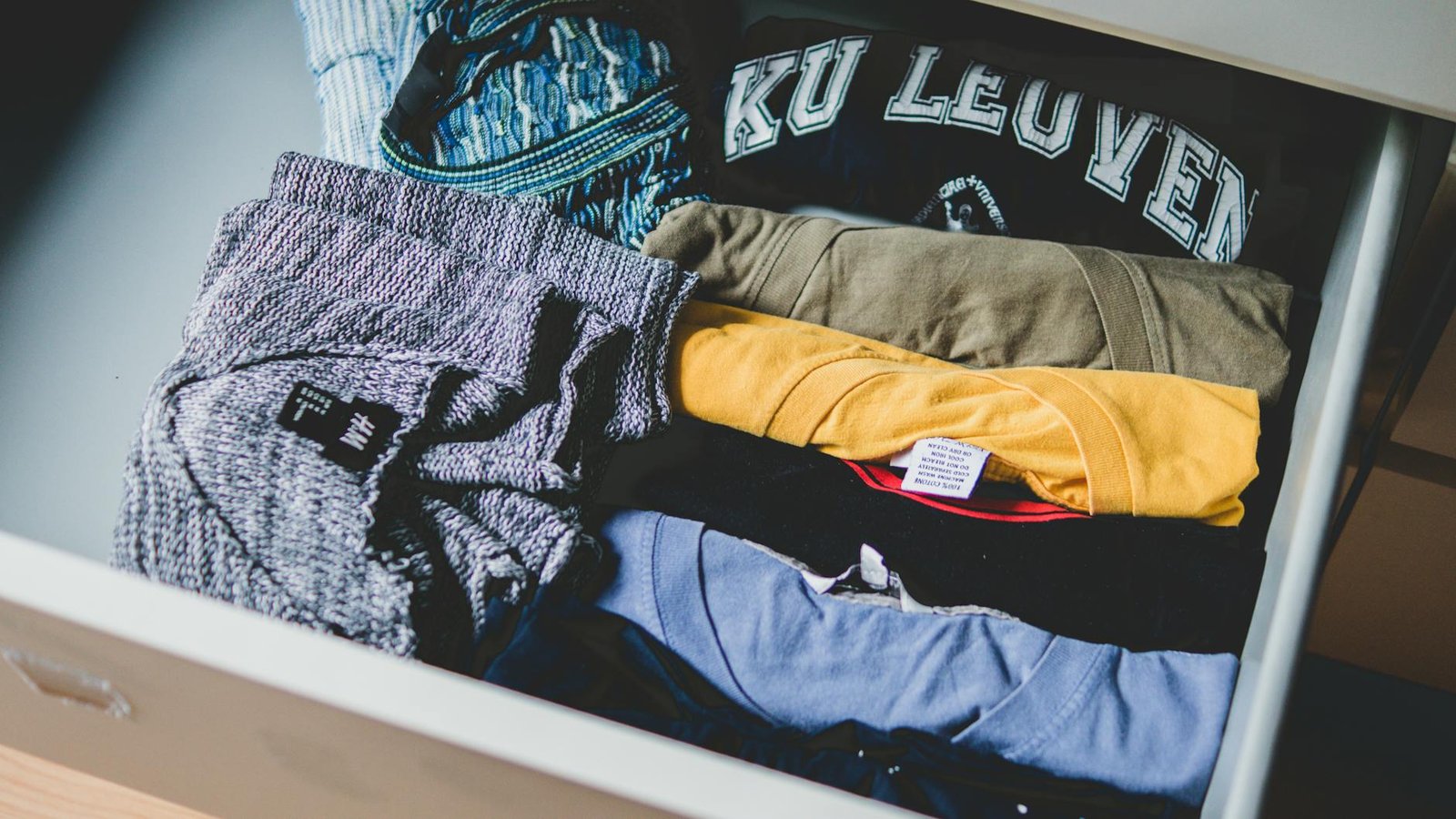
My rolling method:
- Smooth out the garment completely
- Fold sleeves inward if necessary
- Start rolling from the bottom, keeping it tight and even
- Tuck in any loose ends
Rolled clothes take up significantly less space than traditional folds, and they’re perfect for items you grab frequently. I use this method for all my gym clothes and casual t-shirts.
📖 Storage Strategy: I organize my rolled items by category and color, making it easy to grab exactly what I need without disturbing the rest of the drawer.
👔 Dress Shirts and Professional Wear
Professional clothing requires a different approach. I’ve learned that dress shirts need a flat-fold technique that minimizes creasing while still saving space.
My professional wear folding process:
- Button the shirt completely and lay it face down
- Fold the sleeves back along the shoulder seam
- Fold each side of the shirt toward the center, creating clean lines
- Fold the bottom up to meet the collar, creating one clean fold line
This method keeps dress shirts relatively wrinkle-free while still allowing me to store them efficiently. I stack these horizontally in my dresser, but I never stack more than 4-5 high to avoid excessive wrinkling.
🧥 Dealing with Bulky Items
Sweaters, hoodies, and other bulky items used to be my biggest dresser challenge. They took up enormous amounts of space and always seemed to create chaos no matter how I folded them.
My solution is what I call “bundle folding”:
- Lay the item flat and fold the arms across the chest
- Fold the bottom up to create a compact square or rectangle
- For extra-bulky items, I sometimes roll them after folding
The key insight I’ve gained is that bulky items work best when they’re compressed as much as possible without creating permanent creases. I also designate specific drawers for these items so they don’t overwhelm my other clothes.
🩲 Undergarments and Small Items
Small items like underwear, socks, and bras deserve their own folding strategy. I used to just toss these into drawers, but organized folding makes such a difference in both space usage and daily convenience.
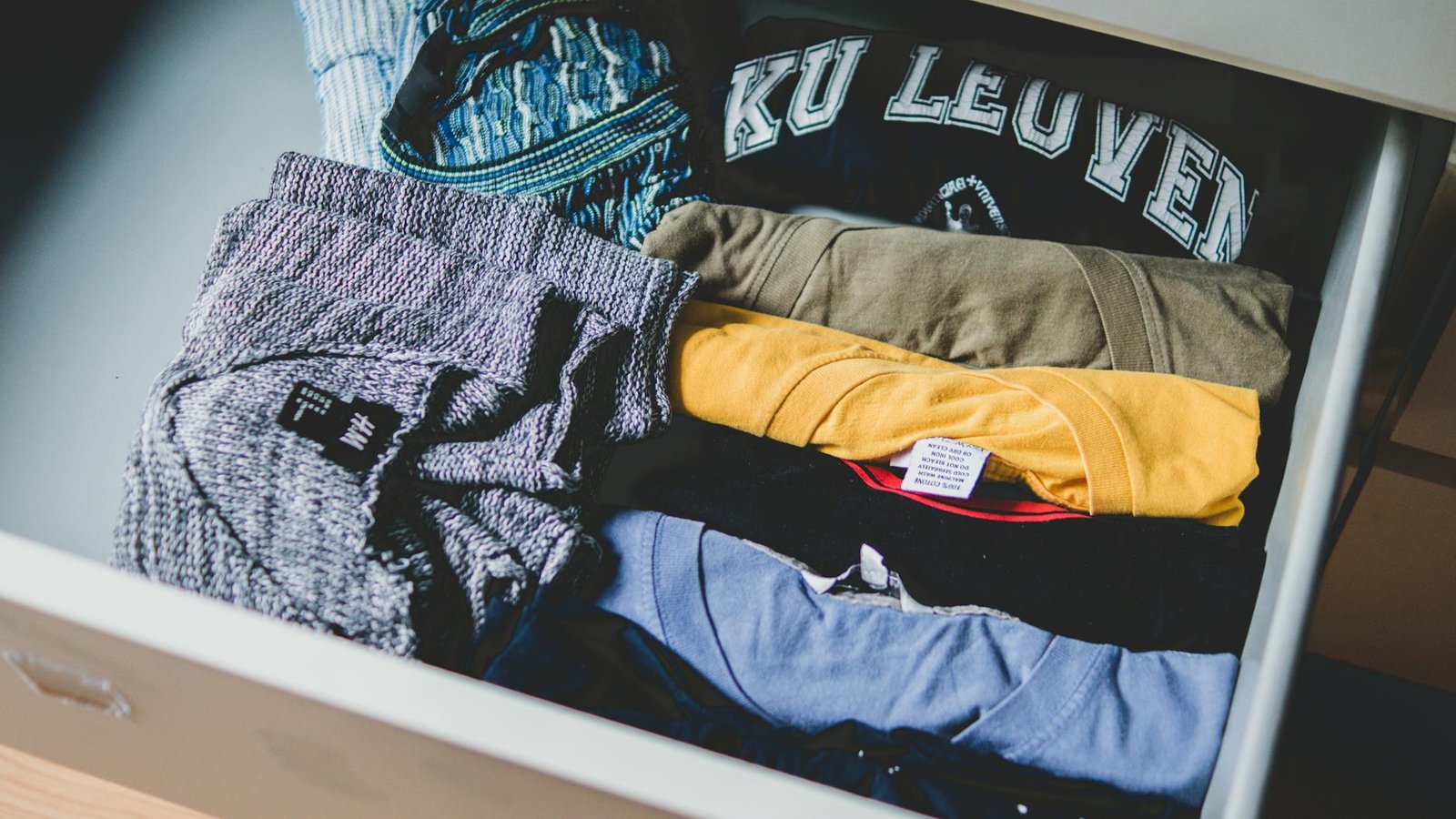
For underwear and bras, I fold them into small, uniform rectangles and arrange them in rows. For socks, I’ve completely abandoned the traditional “sock ball” method. Instead, I lay one sock flat, place the other on top, and fold them together into a neat rectangle. This prevents stretching and keeps pairs together better than rolling.
Just like when I was organizing important papers on my desk, having designated spaces for these small items prevents them from creating chaos in my drawers.
📏 Measuring and Planning Your Dresser Space
One thing I learned the hard way is that folding techniques need to match your specific dresser dimensions. I spent time measuring each drawer and adjusting my folding sizes accordingly.
I recommend measuring your drawer width and depth, then practicing your folds to ensure they fit perfectly. My t-shirt vertical folds, for example, are sized specifically to fit my drawer width with no wasted space on either side.
💡 Organization Tip: I keep a small ruler in my laundry room to check fold dimensions when I’m learning new techniques or organizing new clothes.
🔄 Maintaining Your Folding System
The biggest challenge with any folding system is maintaining it consistently. In my experience, the key is making the system so simple and logical that it becomes second nature.
I follow a few maintenance rules:
- I fold clothes immediately after they’re dry – no more “clean clothes pile” on my bed
- I stick to my designated folding methods for each type of garment
- I do a weekly drawer check to make sure everything stays organized
- I re-fold any items that get messed up during the week
Similar to how I approach budget-friendly garage organization, consistency is more important than perfection. Even if my folds aren’t Pinterest-perfect every time, maintaining the system keeps my dressers functional and spacious.
🔧 Tools That Actually Help
While you don’t need fancy gadgets to fold clothes well, I’ve found a few simple tools that make the process easier and more consistent:
- A clean, flat folding surface (I use my bed or a large dresser top)
- Drawer dividers to keep categories separated
- A small measuring tape for getting fold sizes right
- Good lighting so I can see what I’m doing clearly
The most important tool, honestly, is patience. It took me several weeks to develop muscle memory for these folding techniques, but now they’re completely automatic.
❓ Frequently Asked Questions
How much space can proper folding really save?
In my personal experience, switching from haphazard folding to systematic space-saving techniques increased my dresser capacity by about 40-50%. The vertical t-shirt folding method alone nearly tripled the number of shirts I could fit in one drawer.
Will these folding methods wrinkle my clothes more?
Actually, I’ve found the opposite to be true. When clothes are folded properly and have designated spaces, they experience less shifting and crushing, which means fewer wrinkles. The key is not overpacking drawers even with these space-saving methods.
How long does it take to learn these folding techniques?
I’d say it took me about two weeks of consistent practice to get comfortable with the new methods, and about a month before they felt completely natural. The time investment is absolutely worth it for the long-term organization benefits.
Should I refold everything in my dresser right away?
I recommend starting with one category of clothing at a time. I began with t-shirts since they’re the easiest to practice with, then gradually applied the techniques to other garments as I got more comfortable. This approach prevents the process from feeling overwhelming.
🎯 Making These Techniques Work for You
The truth is, there’s no one-size-fits-all solution to dresser organization. The folding methods I’ve shared work brilliantly for me, but you might need to adapt them based on your specific clothes, dresser dimensions, and personal preferences.
My advice is to start with one technique that appeals to you most – maybe the vertical t-shirt fold or the rolling method for casual wear. Practice it for a week, see how it works in your space, then gradually expand to other categories.
The goal isn’t perfect folds that look like a retail store display. The goal is a system that saves you space, saves you time, and makes getting dressed easier and more pleasant.
What folding challenges are you facing in your dresser organization? I’d love to hear about your experiences and any techniques you’ve discovered that work well for your specific situation. Leave a comment below and let’s help each other create more organized, functional bedroom spaces!