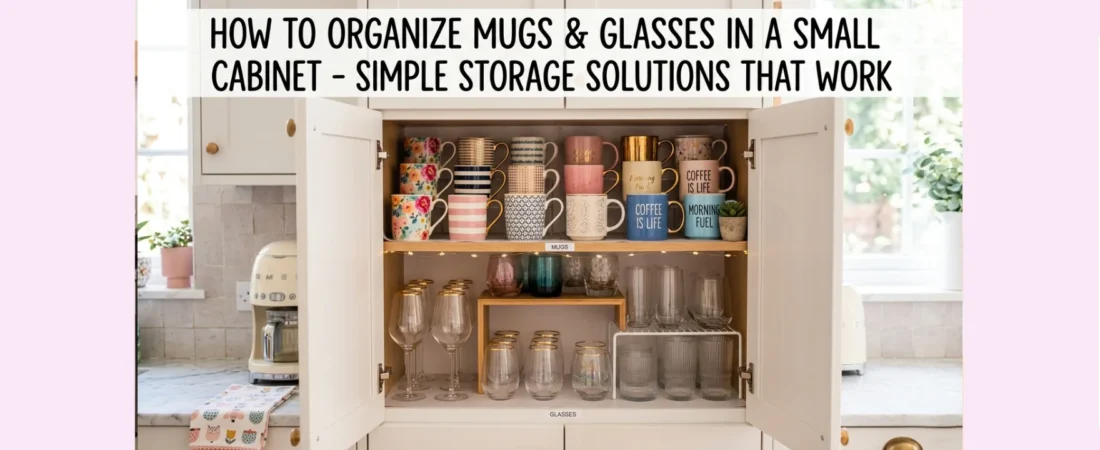
Quick Answer
The best way to organize mugs in a small cabinet is to use vertical stackers, shelf risers, and hooks to maximize every inch of space. Store frequently used mugs at eye level, nest similar-sized items together, and use the cabinet door for additional hanging storage.
I’ll be honest with you – my mug cabinet used to be a disaster zone. Every time I opened that door, I’d hold my breath hoping nothing would tumble out and crash to the floor. Sound familiar? After years of trial and error (and yes, a few broken mugs along the way), I’ve finally cracked the code on organizing mugs and glasses in small cabinets.
The truth is, most of us have way more mugs than we actually need, crammed into spaces that weren’t designed for our ever-growing collections. But with the right approach and some clever storage solutions, even the tiniest cabinet can become a model of organization that makes your morning coffee routine a joy instead of a juggling act.
🔍 Assess Your Current Mug Situation
Before diving into organization solutions, I always start by taking everything out of the cabinet. Seriously, everything. This step might seem overwhelming, but it’s crucial for understanding what you’re working with.
When I first did this with my own cabinet, I discovered I had 23 mugs for a household of two people. Twenty-three! No wonder I couldn’t find my favorite coffee mug half the time. I sorted them into three piles: daily use, occasional use, and “why do I still have this?” The last category went straight to the donation box.
💡 Pro Tip: Keep only what you actually use. I follow the “one week rule” – if I haven’t reached for a mug in a week, it probably doesn’t deserve prime cabinet real estate.
Measure your cabinet space too. I can’t tell you how many organizers I’ve bought that didn’t fit properly because I eyeballed the measurements. Trust me, grab a tape measure and write down the dimensions of each shelf, including height, width, and depth.
📏 Maximize Vertical Space with Smart Solutions
Small cabinets have one major advantage that many people overlook – vertical space. I’ve learned that thinking in layers is the secret to cramming more storage into a tiny area without creating chaos.
🔝 Shelf Risers Are Game-Changers
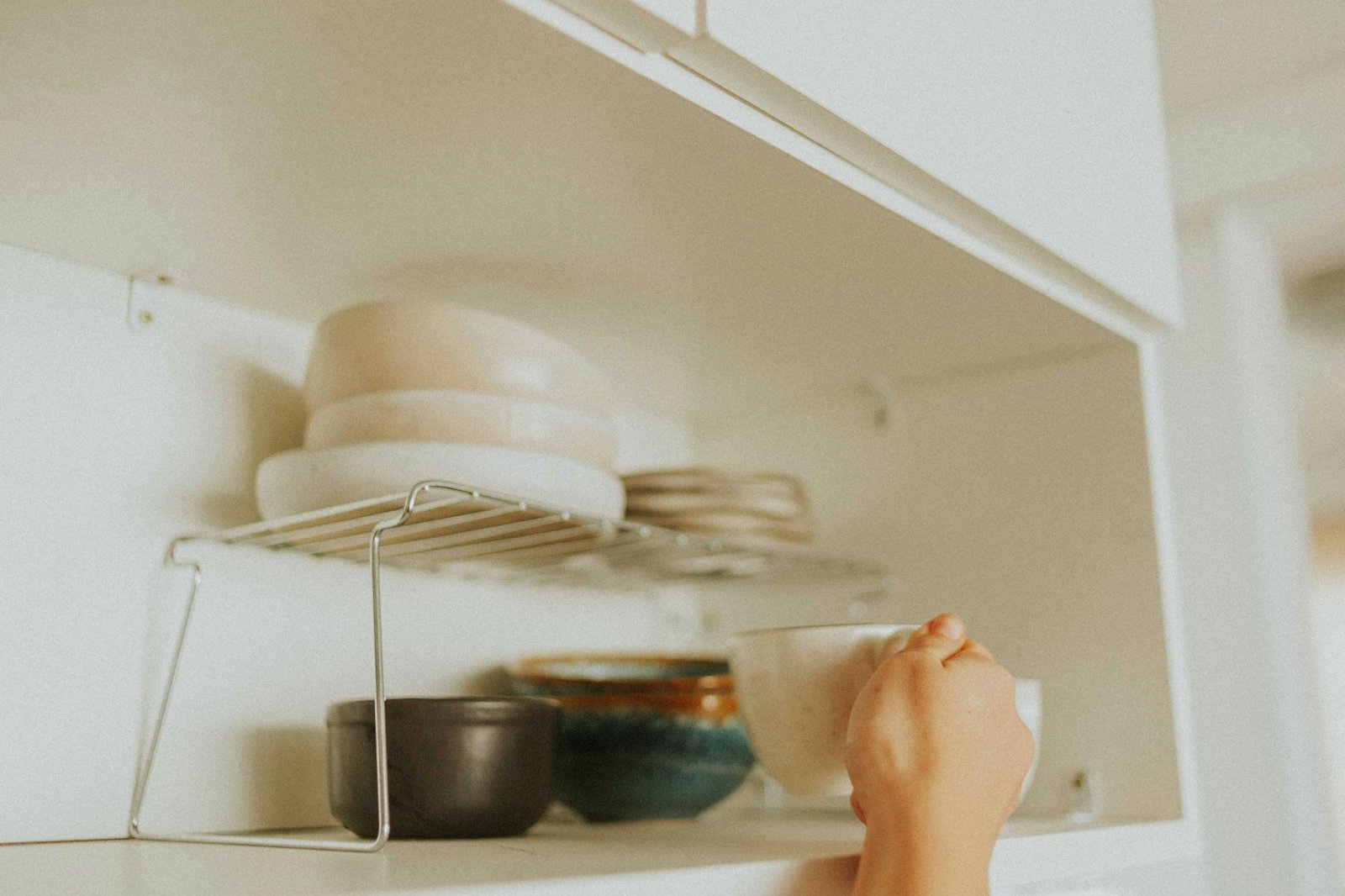
Shelf risers were my first real breakthrough in mug organization. These simple platforms create two levels of storage where you previously had one. I use expandable ones that can adjust to fit different cabinet widths, and they’ve literally doubled my usable space.
Here’s how I arrange them: shorter items like espresso cups go on the lower level in front, while regular mugs sit on the riser in back. Everything stays visible and accessible, which means no more digging around blindly for that one mug you want.
🏗️ Stackable Mug Trees
For deeper cabinets, stackable mug trees work wonders. Unlike traditional countertop mug trees, these compact versions fit inside cabinets and hold multiple mugs vertically. I love that I can grab any mug without disturbing the others – something that’s impossible with traditional stacking.
🎯 Strategic Placement for Daily Efficiency
Organization isn’t just about fitting everything in – it’s about making your daily routine smoother. I’ve learned that where you place items is just as important as how you store them.
👁️ Eye Level = Daily Essentials
My everyday mugs live at eye level, right where I can see and reach them without thinking. This prime real estate is reserved for the mugs I use most often – my morning coffee mug, my tea mug, and maybe one or two others.
Everything else gets stored higher or lower based on frequency of use. Holiday mugs and special occasion pieces go up high, while backup everyday mugs sit on lower shelves.
📖 Remember: The goal is to create a system that works for your specific habits. If you’re a tea drinker who uses different mugs for different teas, organize accordingly!
👥 Group Similar Items Together
I group my mugs by size and function rather than trying to create perfect matched sets. All my large coffee mugs go in one section, smaller tea cups in another, and specialty items like travel mugs have their own designated spot.
This approach makes so much more sense than trying to keep sets together, especially when you’re dealing with limited space. Similar to how I organize kitchen drawers with logical groupings, I’ve found that functional organization beats aesthetic perfection every time in small spaces.
🚪 Don’t Forget the Cabinet Door
The inside of your cabinet door is prime real estate that most people completely ignore. I’ve installed slim hooks on mine to hold my most-used mugs, and it’s been a total game-changer.
Over-the-door organizers work well too, especially for lightweight items like plastic cups or small mugs. Just make sure whatever you choose doesn’t interfere with the door closing properly – I learned this the hard way when I installed hooks that were too deep!
Utilize cabinet door space with hooks and organizers for additional mug and glass storage
🥤 Special Considerations for Glasses
Glasses present their own unique challenges in small cabinets. They’re more fragile than mugs, often taller, and come in more varied shapes and sizes.
🛡️ Protect with Shelf Liners
I always use shelf liner in my glass storage areas. It prevents sliding and provides a bit of cushion that can mean the difference between a saved glass and a shattered one. The textured kind works best – it grips the glass bottoms and keeps everything in place.
📐 Nest When Possible
Identical glasses can nest together to save tons of space, but I’m careful not to stack too many high. Three is my maximum – any more and the risk of the whole tower toppling becomes too great.
For different sized glasses, I use the “Russian doll” approach when possible, tucking smaller glasses inside larger ones. Just make sure there’s enough clearance that you won’t struggle to separate them later.
🔄 Maintenance and Long-Term Success
The best organization system in the world won’t work if you don’t maintain it. I’ve learned that consistency is key to keeping my small cabinet organized long-term.
My rule is simple: everything has a designated spot, and it goes back there immediately after washing. It takes maybe an extra 30 seconds, but it prevents the slow slide back into chaos that used to plague my cabinets.
I also do a monthly review where I pull everything out and reassess. Do I still use all these mugs? Are there new items that need homes? Is the system still working for my daily routine? Just like when I organize deep kitchen cabinets, regular maintenance prevents small problems from becoming big headaches.
💡 Weekly Reset: I spend five minutes every Sunday putting any wayward mugs back in their proper spots. This small habit has been crucial for maintaining order.
❓ Frequently Asked Questions
How many mugs should I keep in a small cabinet?
Honestly, it depends on your household size and drinking habits, but I recommend no more than 2-3 mugs per person for daily use, plus a few extras for guests. In my experience, anything beyond that just creates clutter in a small space.
Should I store mugs handle-in or handle-out?
I prefer handle-out because it makes grabbing mugs much easier, especially in tight spaces. Handle-in can save a tiny bit of space, but the convenience factor isn’t worth it to me. You want your morning coffee routine to be smooth, not frustrating!
How do I prevent chipping when stacking glasses?
Never stack different types of glasses together, and always use shelf liner for grip and protection. I also make sure there’s at least a quarter-inch clearance between the rim of one glass and the bottom of another when stacking.
What’s the best way to organize mismatched mugs and glasses?
Group by function rather than appearance. Put all your coffee mugs together regardless of pattern, tea cups in another section, and so on. This functional approach works much better than trying to create perfect visual harmony in a small space.
🏆 Final Thoughts
Organizing mugs and glasses in a small cabinet doesn’t have to be a constant source of frustration. With the right approach – maximizing vertical space, strategic placement, and consistent maintenance – even the tiniest cabinet can become a model of efficiency.
The key is working with your space and habits rather than fighting against them. Start with a good declutter, invest in a few smart storage solutions, and create a system that makes sense for your daily routine. Similar to organizing under the kitchen sink, small cabinet organization is all about maximizing every inch while keeping frequently used items easily accessible.
Remember, perfection isn’t the goal – functionality is. Your organized mug cabinet should make your life easier, not create more work. Trust me, when you can grab your favorite mug without playing cabinet Jenga every morning, you’ll know all the effort was worth it.
What’s your biggest mug cabinet challenge? I’d love to hear about your small space organization wins and struggles in the comments below!